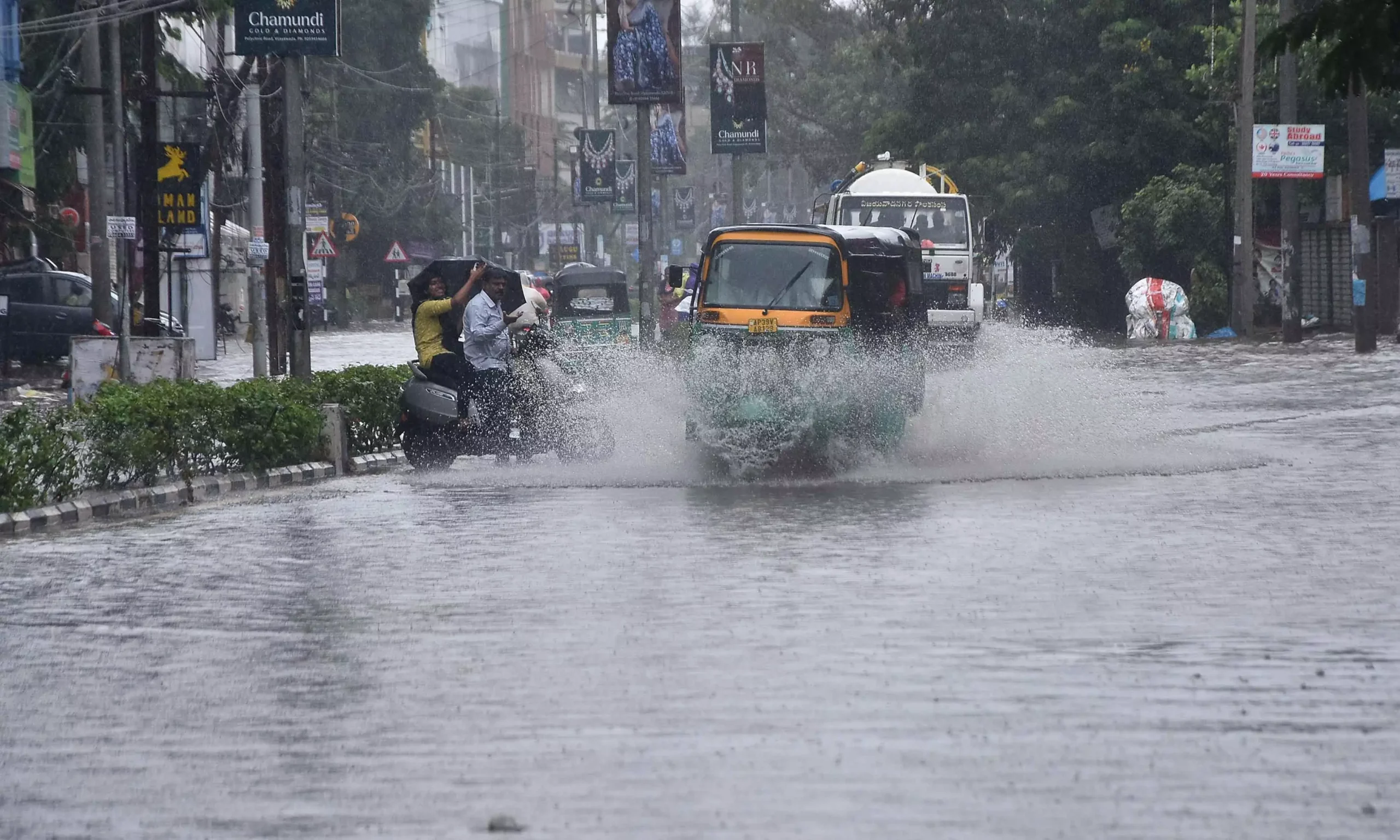
As severe low-pressure area has intensified into a depression, entering the northwest Bay of Bengal on Friday morning before making landfall along the coasts of West Bengal and Bangladesh, Andhra Pradesh is relieved from Cyclone `Gandham’.
Over the next 24 hours, the system is expected to move towards West Bengal, North Odisha, and Jharkhand, bringing significant rainfall to the region. As a result of the depression, many coastal areas experienced overcast conditions on Friday, with rainfall recorded in several parts of North Andhra.
The Indian Meteorological Department (IMD) has issued warnings for heavy rain across North and South Odisha on Friday night, advising fishermen to refrain from going out to sea due to expected winds of 40-50 km/h. Safety indicator number three has been hoisted at ports along the northern coast.
State Home and Disaster Management Minister Anitha held a review on the flash floods and heavy rains at the Disaster Management Organization office in Tadepalli on Friday. She directed preventive measures in the flash floods affected areas. The minister reviewed the situation of the impact of the flash floods from the AP Emergency Operation Center.
The organization’s MD Prakhar Jain spoke to the officials. People were advised to be alert as there is a possibility of heavy rains in coastal Andhra. District collectors were advised to set up warning boards at hazard hotspots.
The minister asked to identify the flash floods in ponds, canals and roads in coordination with the Irrigation, R&B and Panchayat Raj departments and take immediate action.
The minister urged the public to remain vigilant as more rain is forecasted for areas throughout coastal Andhra. Light to moderate rainfall occurred on Friday, largely attributed the active southwest monsoon and the influence of the depression.
Munchingipattu in Alluri district recorded a substantial 46 mm of rainfall, while numerous locations along the north coast received over 10 mm.
Following consecutive days of rain, the overall situation has improved in 17 districts; however, Rayalaseema continues to face a rainfall deficit. The recent downpours have positively impacted the cultivation of paddy, cotton, and pulses, providing much-needed relief to farmers tending to their kharif crops.