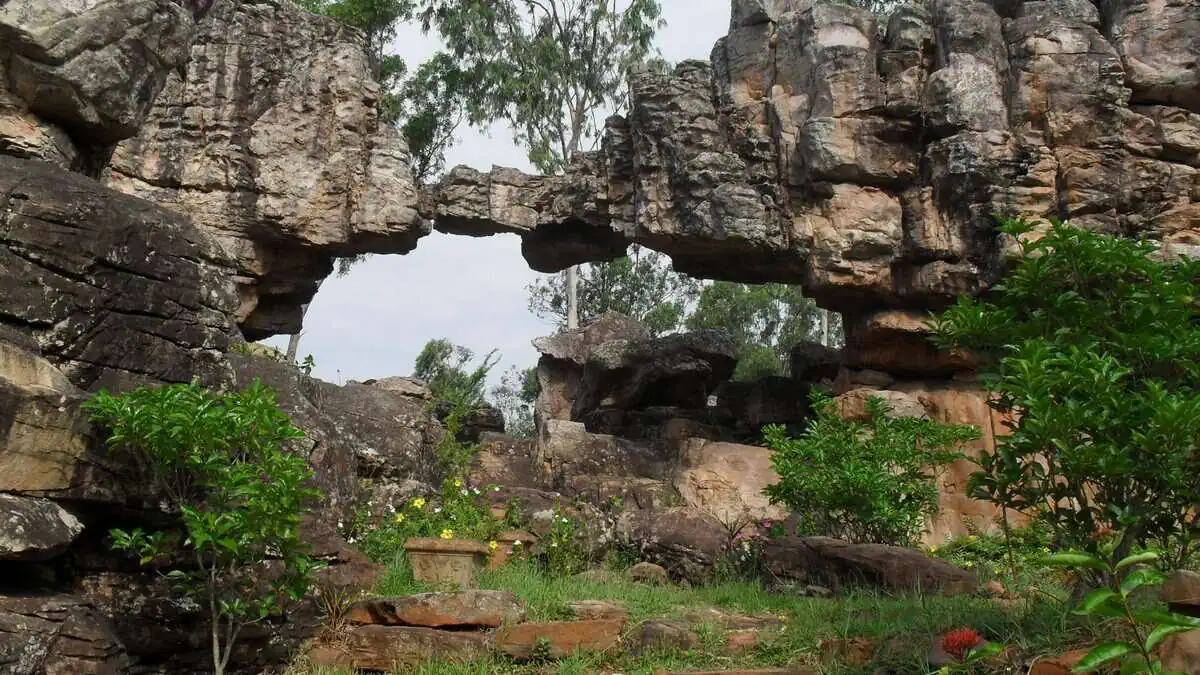
Seven properties in India, including the natural heritage of Tirumala Hills and the Bhimili’s Erra Matti Dibbalu, have been included in the tentative list prepared by UNESCO for World Heritage recognition.
The others include Panchgani in Maharashtra, Deccan Traps in Mahabaleshwar region, St. Mary’s Island Cluster Geological Heritage in Udupi in Karnataka, Meghalayan Age Caves (East Khasi Hills) in Meghalaya, Naga Hill Ophiolite in Nagaland, and Varkala Natural Heritage in Kerala.
Including these seven, 69 properties in India have been included in the tentative list so far. It is believed that the Saptagiris, the seven hills where Lord Vishnu rested, are the seven foothills of Adisesha in Tirupati. The 7 peaks are Seshadri, Niladri, Garudadri, Anjanadri, Vrishabhadri, Narayanadri, and Venkatadri. Each hill in the Tirumala hills, where holiness is evident at every step, has its own history.
Travel historian Enugula Veeraswamy, who visited this area in 1830, wrote about the special features of this area at that time. The Tirumala hills, which combine spirituality and natural beauty, are a place of biodiversity. They are home to rare plant and animal species. The climate here is also diverse. Cold winds constantly blow on the hills.
There are frequent showers of rain. Many waterfalls are a feast for the eyes. There are historical monuments here where many sages and sages performed penance. Many stories are spread about the pilgrimage sites here.
There is widespread joy over the inclusion of the Erra Matti Dibbalu, near Bhimili in Visakhapatnam district in the 2025 UNESCO World Heritage List. If they are included in the final list, the conservation of the Erra Matti Dibbalu will be more robust. Currently, they are 200 meters from the coast and 10 to 90 meters above sea level.
Sand grains blown by the winds for thousands of years have become dunes. Some climatic changes that have occurred geographically have favored this. About 6000 years ago, the ocean retreated due to severe changes in the climate. This led to the formation of sand dunes there.
Due to the rain and strong winds, the dunes melted and turned into valleys. Scientists estimate that the sand grains visible on these dunes are 3000 years old. Similarly, a few days ago, the dance system Bharata Natyam, written by Bharata, along with the Bhagavad Gita, which reflects Indian culture, was included in the UNESCO Memory of the World Register.