How Scientists Caught the Universe’s Loudest Ripple
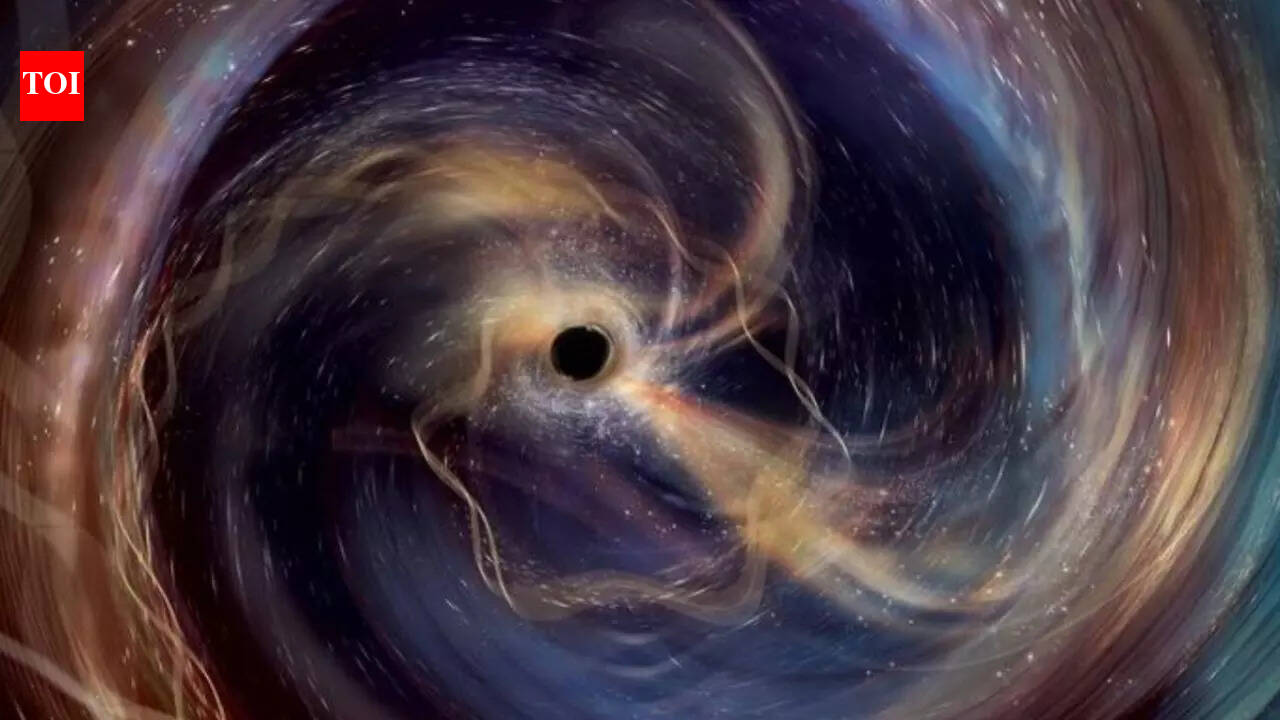
Imagine dropping the heaviest rock ever into a cosmic pond – that’s basically what astronomers just detected! The loudest gravitational wave signal ever recorded, called GW250114, traveled 1.3 billion light-years to reach Earth. This space-time ripple came from two black holes crashing together in an epic collision, shaking the fabric of reality itself. Scientists say this detection is clearer than any gravitational wave ever spotted before.
Listening to Black Hole Collisions
Researchers at the LIGO observatories in the United States caught this massive wave. Since their first detection back in 2015, LIGO’s super-sensitive instruments keep getting better with each upgrade. This new signal was about three times sharper than previous ones – like upgrading from fuzzy radio static to crystal-clear headphones.
Gravitational waves are like space’s version of sound waves. When super-heavy objects (like black holes) accelerate or collide, they create ripples that stretch and squeeze space itself. When these waves pass Earth, our detectors feel microscopic stretching – about a thousand times smaller than an atom!
Einstein’s Ultimate Challenge
Albert Einstein predicted these space ripples way back in 1915 with his theory of general relativity. Instead of thinking of gravity as a simple pull, Einstein described it as massive objects bending space-time like a trampoline. Black hole mergers create the most extreme gravity labs imaginable – perfect for testing Einstein’s ideas to their limits.
Here’s the cool part: When two black holes collide, they don’t just merge silently. The new super-black hole vibrates intensely like a giant bell being struck. This “ringing” creates special tones in the gravitational waves that scientists can analyze.
Decoding Black Hole Fingerprints
That post-collision ringdown holds cosmic secrets! By studying those vibrational tones, astronomers can calculate the newborn black hole’s weight and how fast it’s spinning. GW250114 gave us the clearest view yet of these characteristics – like getting HD footage of a black hole’s birth.
Gravitational wave science is still a baby field – less than ten years old! But discoveries like GW250114 prove we’re entering a new era of space exploration. Not only did Einstein’s theory pass this extreme test, but we’re now unlocking precision studies of the universe’s most violent events. Who knows what cosmic sounds we’ll hear next?