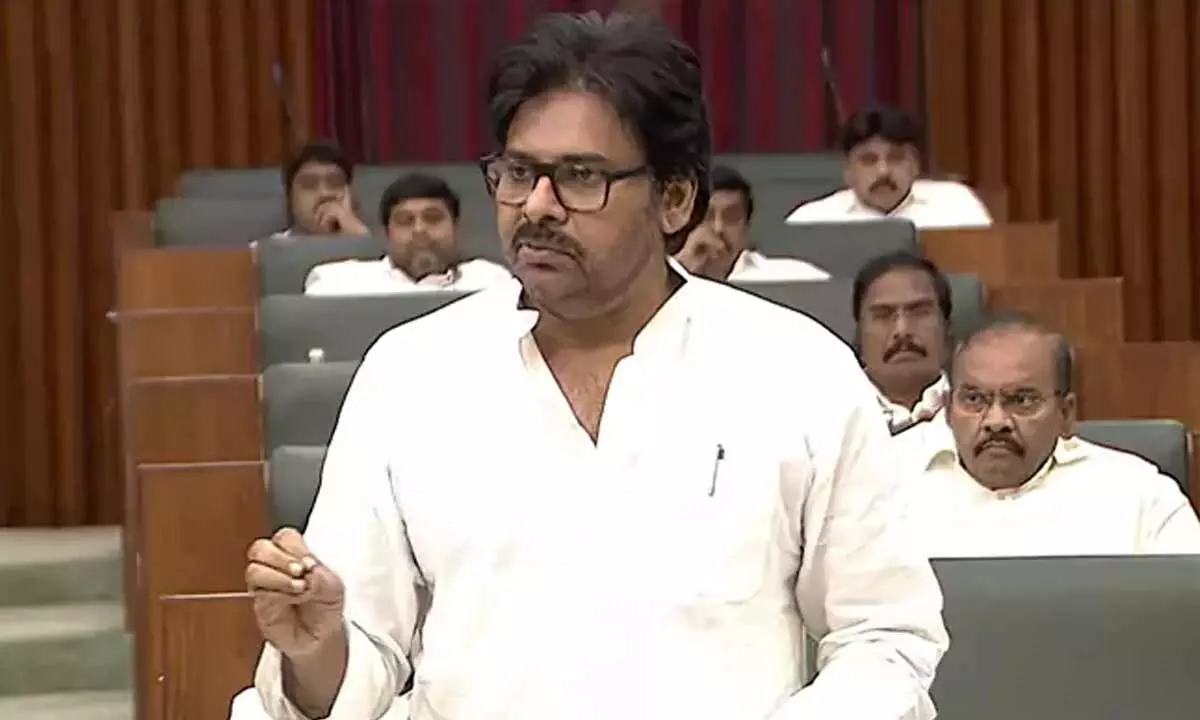
“The government has the responsibility to implement pollution control regulations while encouraging investments in the state. In the name of that, industrialists should not be driven away. Such mistakes were made in the previous government,” Deputy Chief Minister Pawan Kalyan warned the officials.
Discussing the allegations made by TDP MLA Bonda Umamaheswara Rao against the Pollution Control Board in the Assembly, the board’s staff and responsibilities with the officials, he explained that the Pollution Control Board is a statutory body and that the government will have partial supervision in the performance of its duties.
“Can we give the same clean air and water as our elders gave us to future generations? We should work with the aim of providing natural resources as clean as possible. Even in the Godavari basin, we have to buy water and drink it. The water there is polluted due to the aqua sector and paper mills,” he said.
He said that the government will directly monitor and control departments like Panchayat Raj, there will be some limitations in monitoring the decisions and performance of PCB’s duties, and the PCB Executive Council will have legal powers.
“People have lost their lives in accidents that have taken place in companies like LG Polymers. There are pharma companies in the Visakhapatnam region. They should monitor the implementation of pollution control regulations from time to time. Advanced technology should be used in the implementation of the regulations. We reviewed and gave directions to the PCB in the first days of the coalition government’s rule,” he said.
On this occasion, the Deputy Chief Minister put some questions before the Principal Secretary of the Forest and Environment Department. Who are the staff of the Pollution Control Board and what are their duties? How many of them are regular employees? How much is the shortage of staff? To what extent are there contract and outsourced staff?
What are the duties assigned to them? Along with the issues, how is the audit being conducted, the infrastructure available to the board to perform its duties, the financial resources given to them, and what are the issues identified in the audit? To what extent has the Pollution Control Board focused on research and development so far? What are their results?
What is the technology being followed, how is the Pollution Control Board’s website working? Are details of water, air and noise pollution being updated region-wise? To what extent is information available to the public, the Chief Secretary posed many questions.